

Inspiration
Hotel & restaurant flowers
Floral and greenery decor you style yourself, without the weekly florist bill.
One rose on a table, for one year
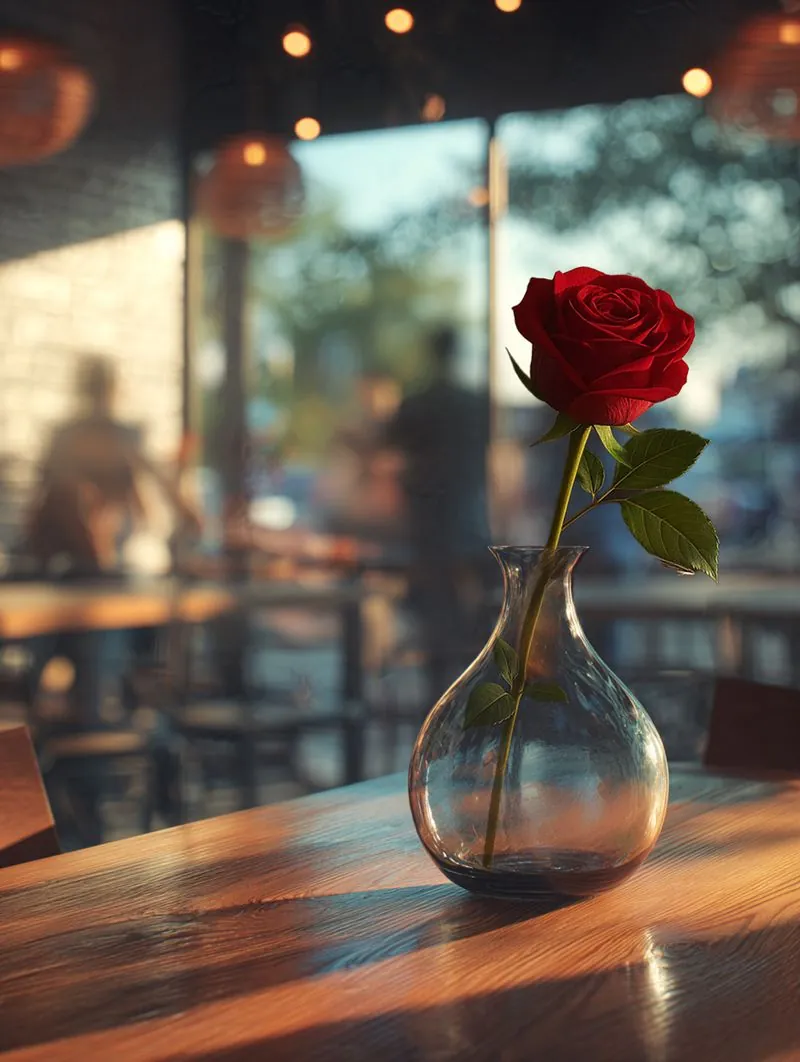
Cut rose, replaced weekly
$104a year, per vase- About $2 a week, 52 times
- Someone checks, trims and replaces it
- Wilted stems between deliveries
Preserved rose on stem
$7once, for a year and more- $7.01 per stem in our gift-box set of 25
- No water, no trimming
- Same look every day
Example based on our guide Preserved & Opportunities #01 and current SecondFlor pro prices, before volume discounts. A full front-desk arrangement (3 hydrangeas, 3 bunches of eucalyptus, 1 bunch of baby's breath) costs about $115, once.
Natural, like your menu
If your kitchen is about fresh, quality ingredients, the table should tell the same story: no plastic flowers, no tired stems. Preserved flowers and foliage are real plants, the same natural flowers, treated with a plant-based, biodegradable solution that keeps them supple for a year and more.
| Plastic flowers | Cut flowers | Preserved flowers | |
|---|---|---|---|
| Real plant | No | Yes | Yes |
| Up close | Looks fake | Wilts within days | Looks fresh every day |
| Replaced | Rarely, and it shows | Every week | Once a year or less |
| End of life | Plastic waste | Weekly deliveries and waste | Biodegradable |
Lasting longer is what makes them the greener choice: fewer replacements, fewer deliveries, less waste. A good story to tell your guests too.
Walk through your venue
Six spots where preserved and faux greenery replace weekly flowers. Start with one, add the others as the budget frees up.
-
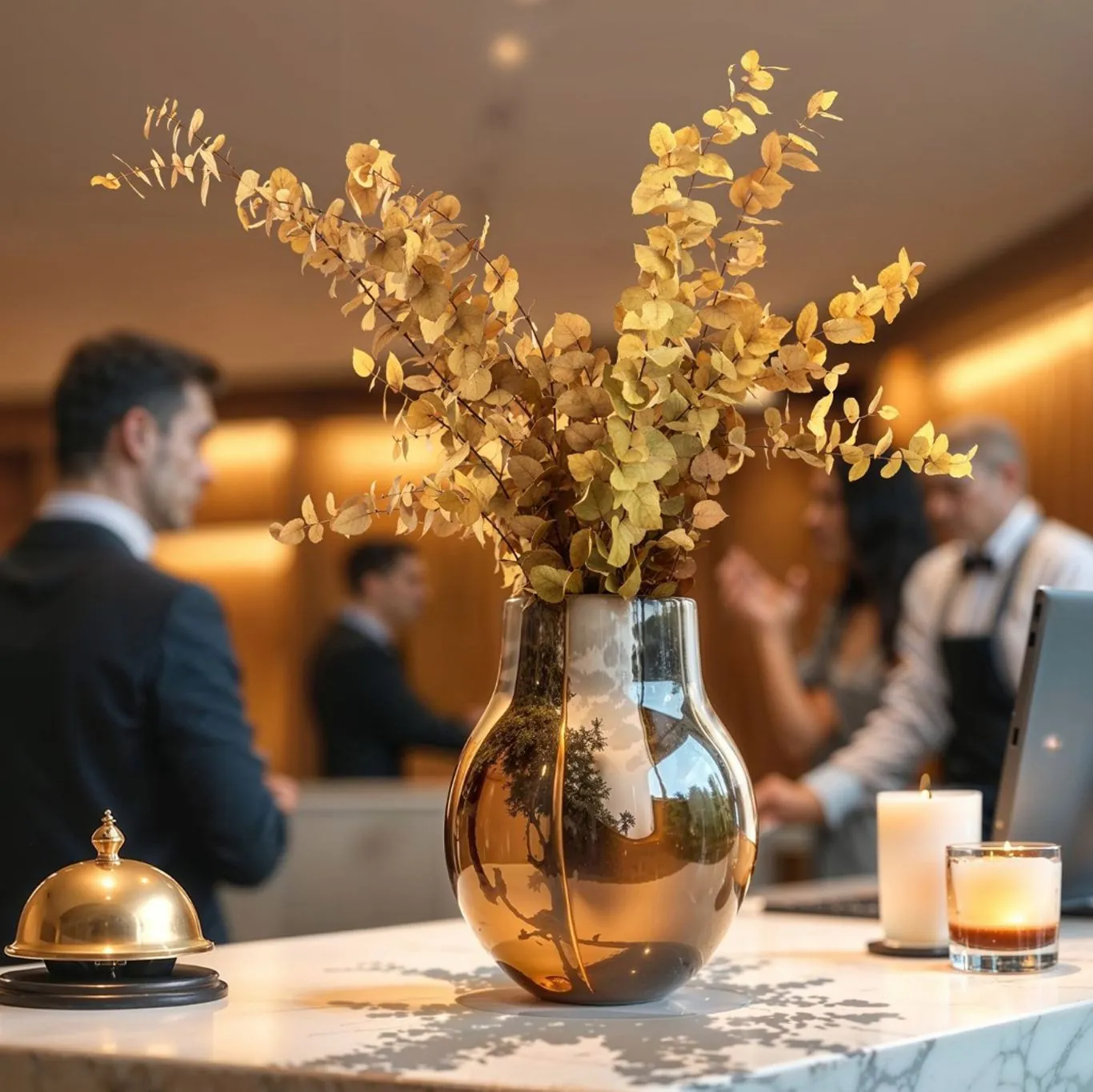
Entrance & front desk
The first and last thing guests see. One generous vase of preserved eucalyptus or olive branches sets your standard at check-in.
-
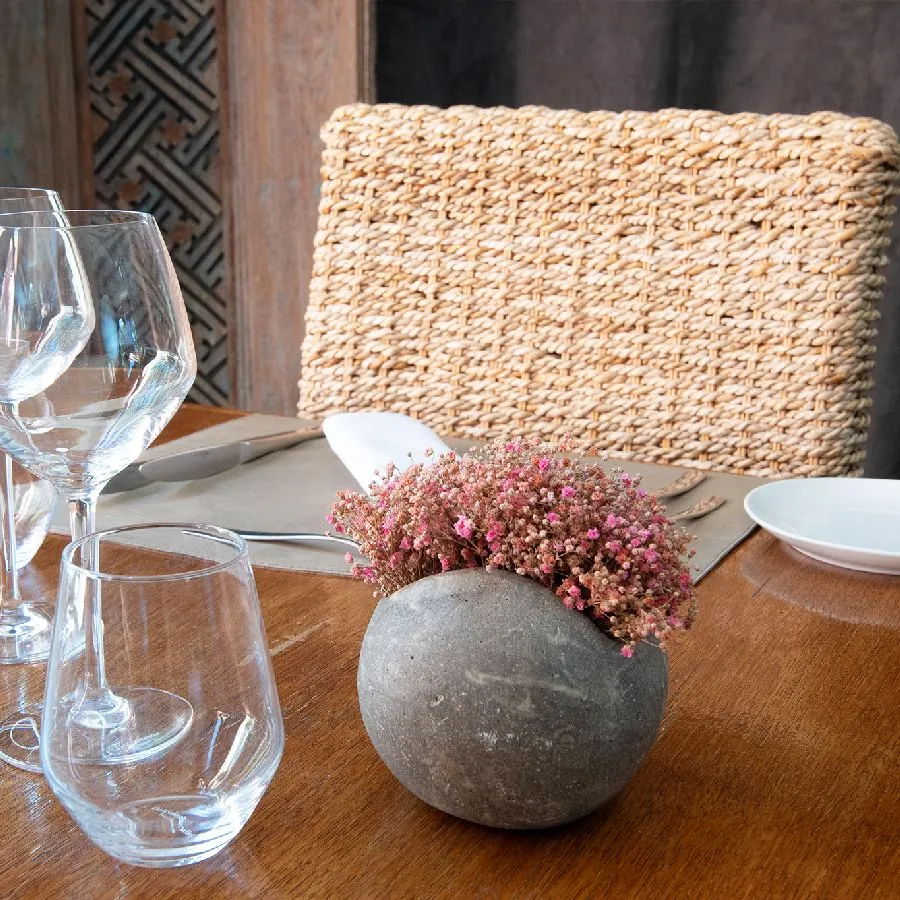
Dining tables
Standardize one low centerpiece and order it in quantity: same look on every table, volume discounts on every reorder. Nothing drops near the plates.
-
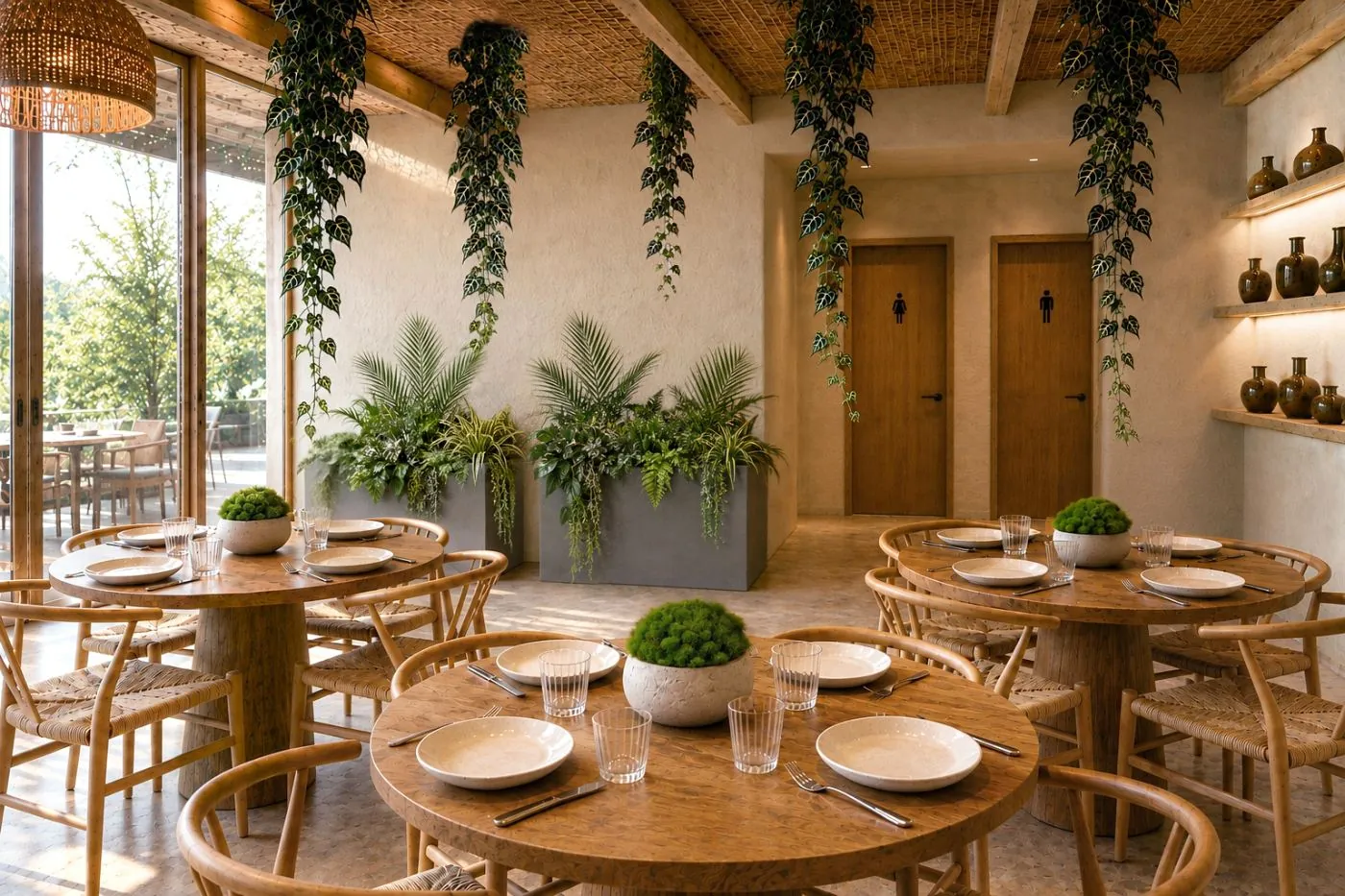
Bar & feature walls
Trailing greenery over the bar or a moss wall behind it becomes your photo spot, and softens the noise in a busy room.
-
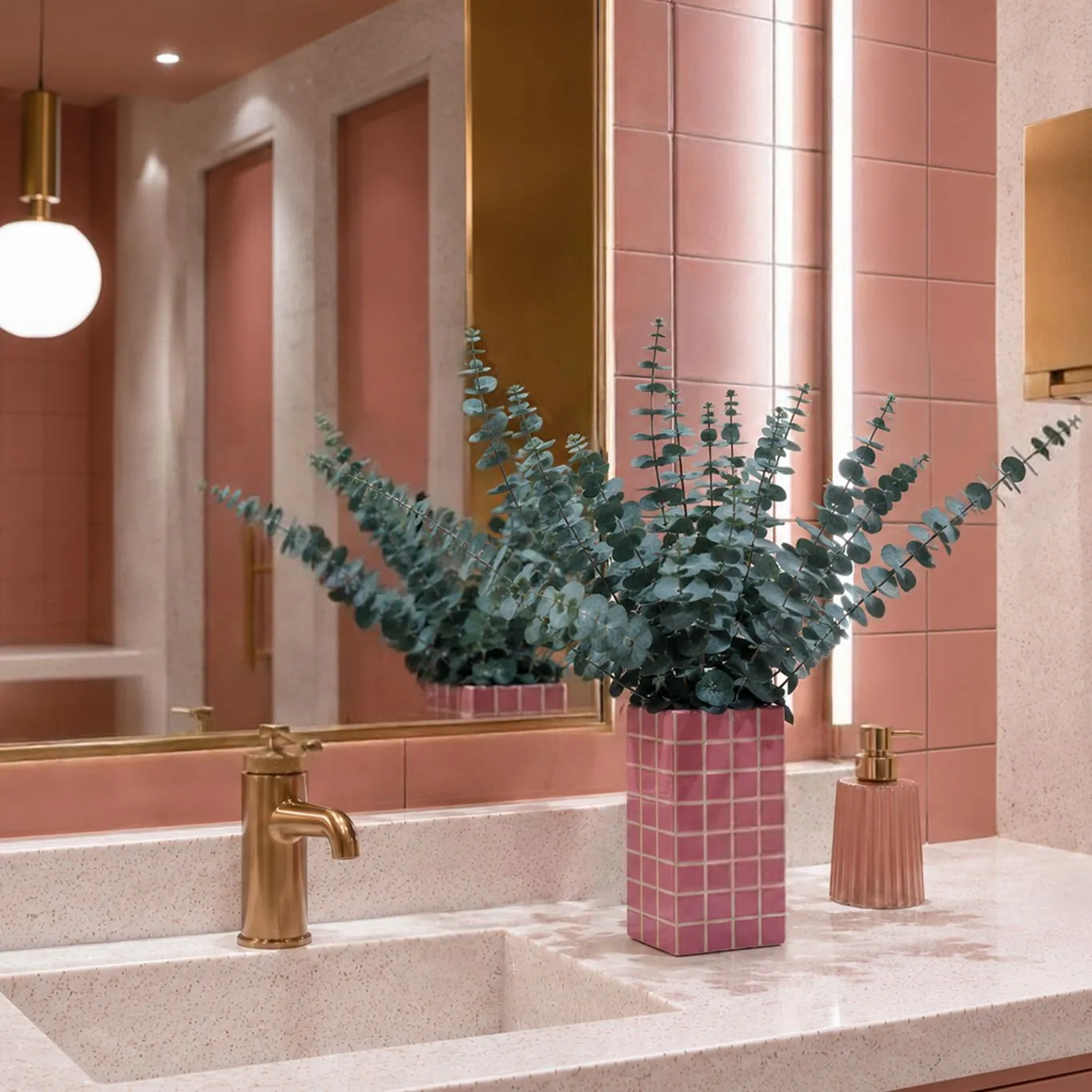
Restrooms
A small arrangement on the vanity shows guests the place is cared for. Preserved plants are perfectly fine in a restroom. In guest bathrooms with a shower, switch to faux greenery.
-
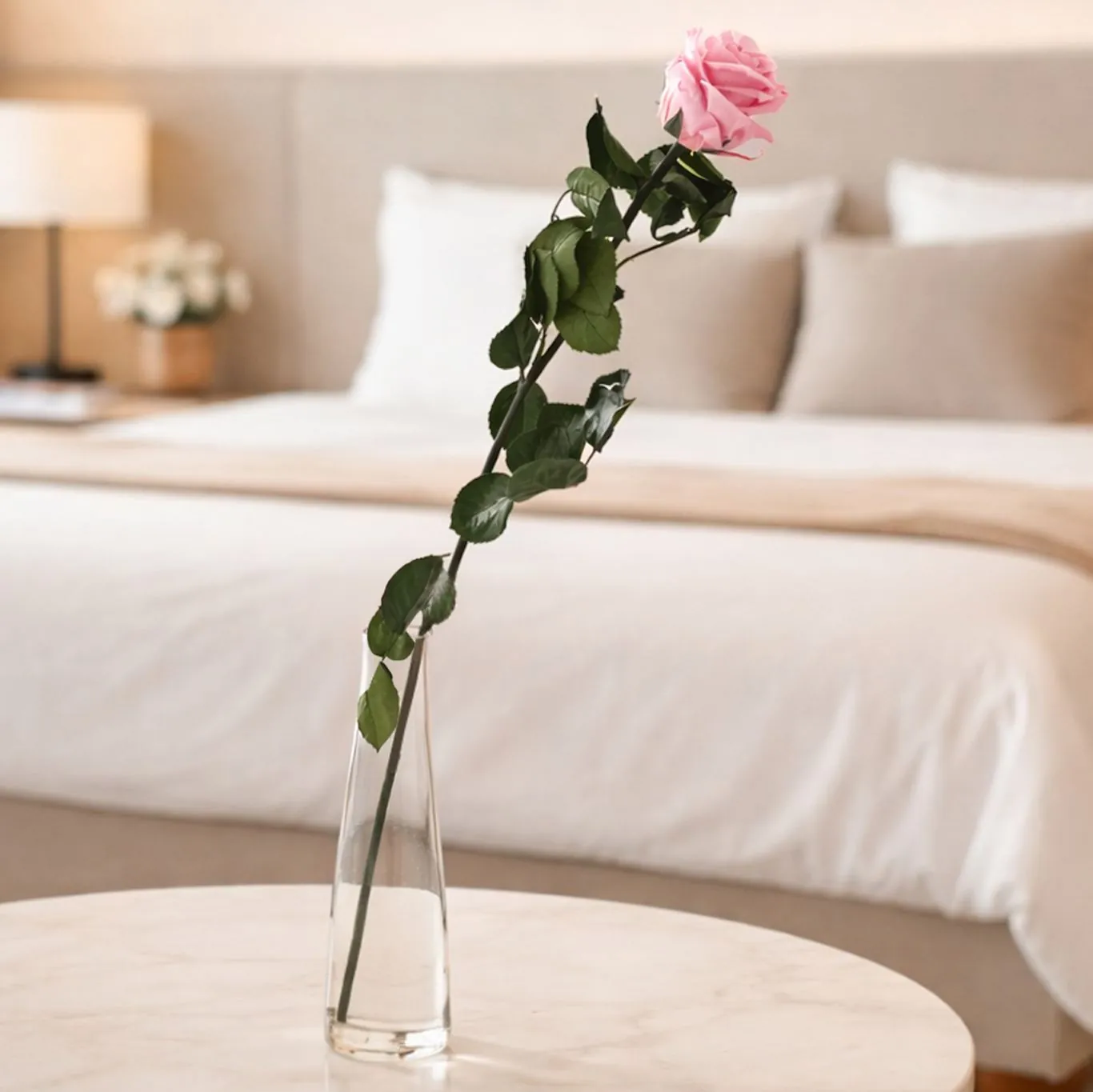
Guest rooms
A single rose on the nightstand or a rose in a glass bowl. No pollen, no scent, nothing for housekeeping to water.
-
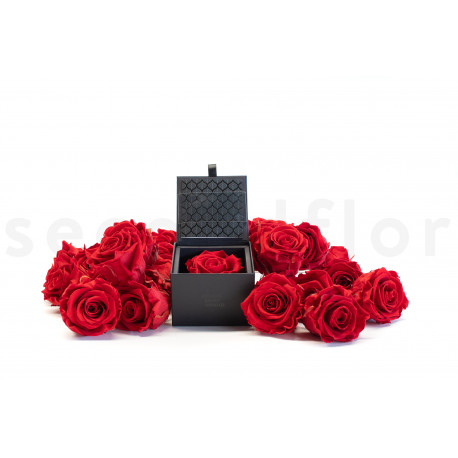
Your hotel shop
Sell guests a souvenir of their stay: a boxed preserved rose at the front desk or in the shop, priced like a gift.
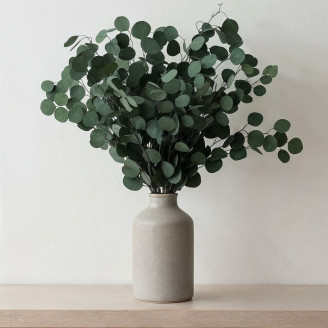 Preserved Eucalyptus Silver Dollar
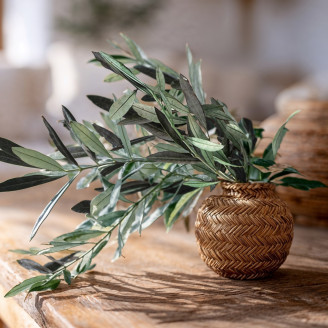 Preserved Olive Branch
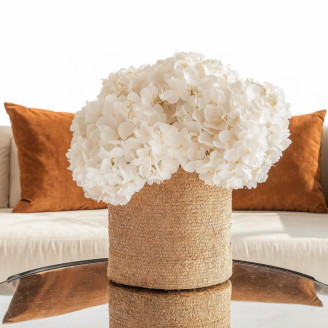 Preserved Hydrangea White
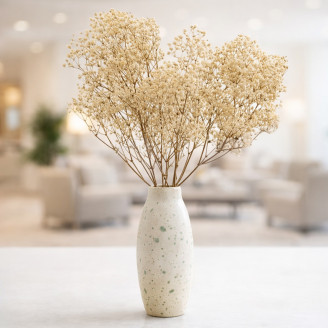 Preserved Baby's Breath Natural
 Dried Mini Pampa Natural (set of 15)
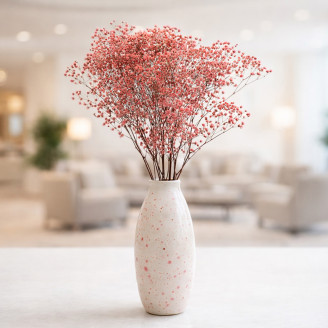 Baby's Breath Pink
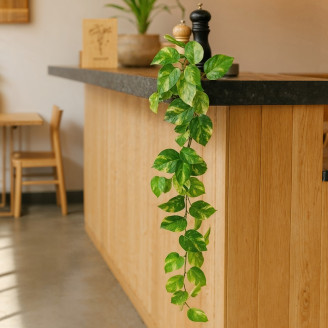 Artificial Pothos Vine Garland
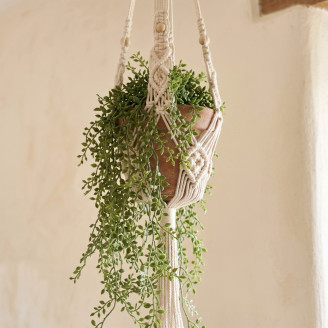 Artificial Trailing Leaf Vine
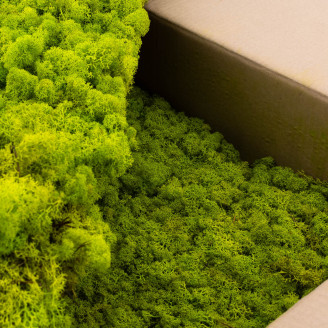 Preserved Reindeer Moss Lime Green (Bulk Box)
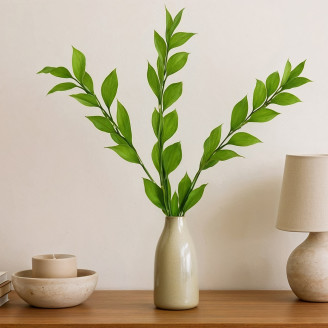 Preserved Ruscus Light Green (set of 3)
 Dried Oregon Lavender
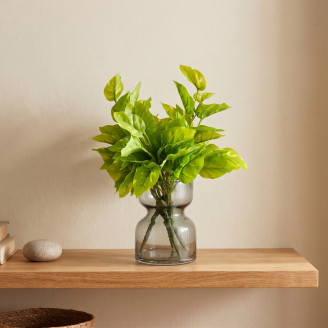 Artificial Pothos Leaf Bush (set of 3)
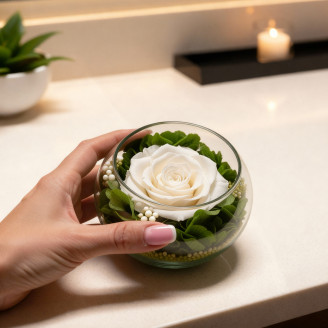 Preserved Rose in Glass Bowl White
 Rose on Stem 20" Red, Gift Box (set of 20)
 Preserved Rose in a Box Red
 Preserved XXL Rose in a Box Red
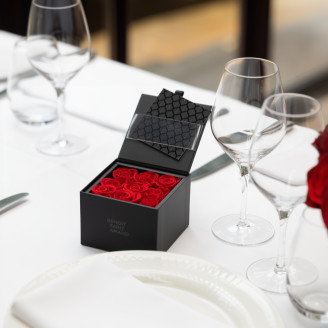 Box of 9 Preserved Roses Red
No florist skills needed
Preserved flowers and foliage arrive ready to use: no conditioning, no water, no recutting every morning. You can cut, bend and move them like any material. If you can set a table, you can do this.
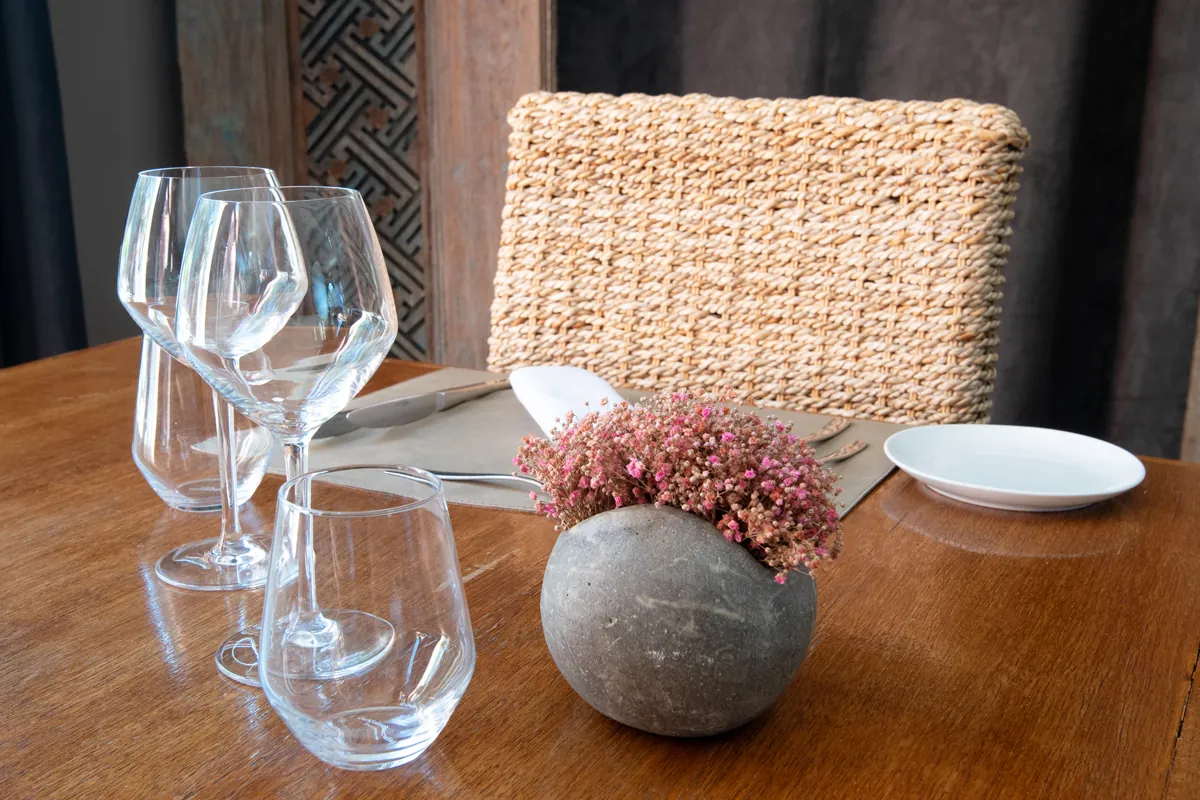
Level 1 · 30 seconds●○○
Place it
A small pot or a bud vase and one bunch: done. Repeat it on every table and you have your look.
Tools: none
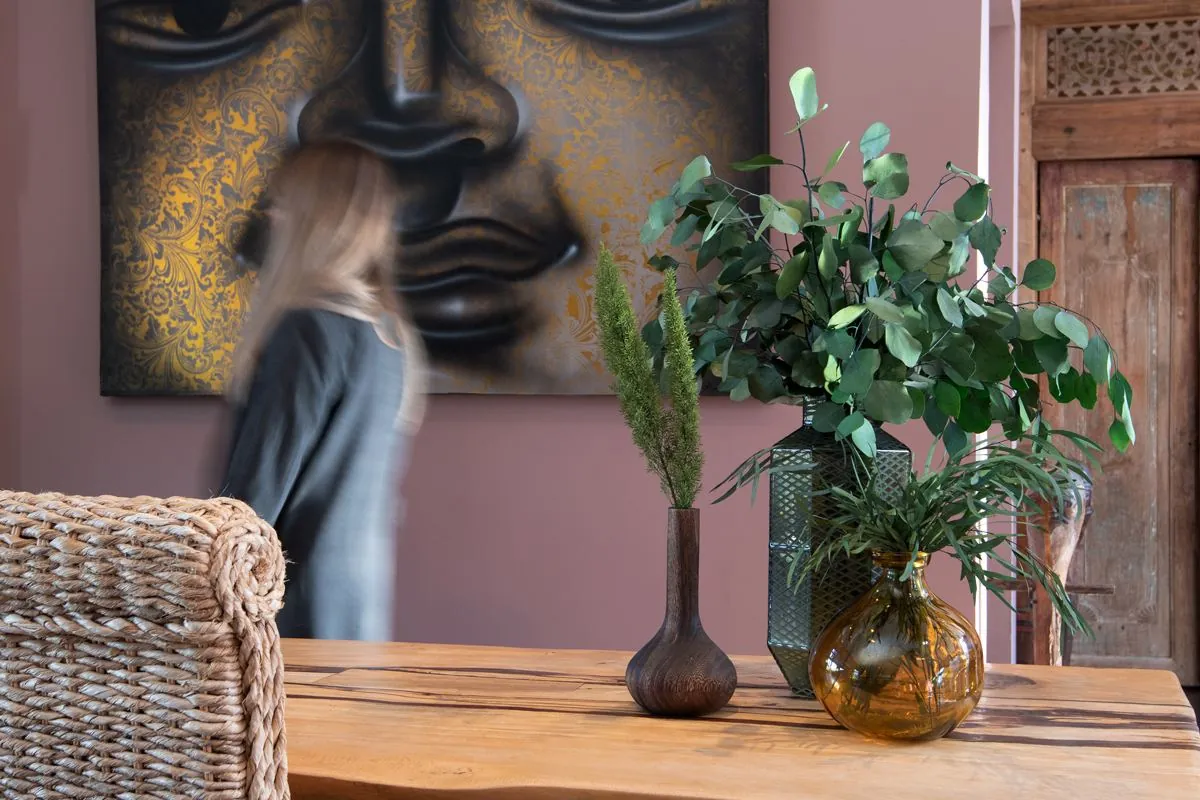
Level 2 · 5 minutes●●○
Fill a vase
Two or three bunches of eucalyptus or olive branches in a nice vase. Cutting the stems to the right height is the only technique.
Tools: scissors
 Preserved Eucalyptus Baby-Blue
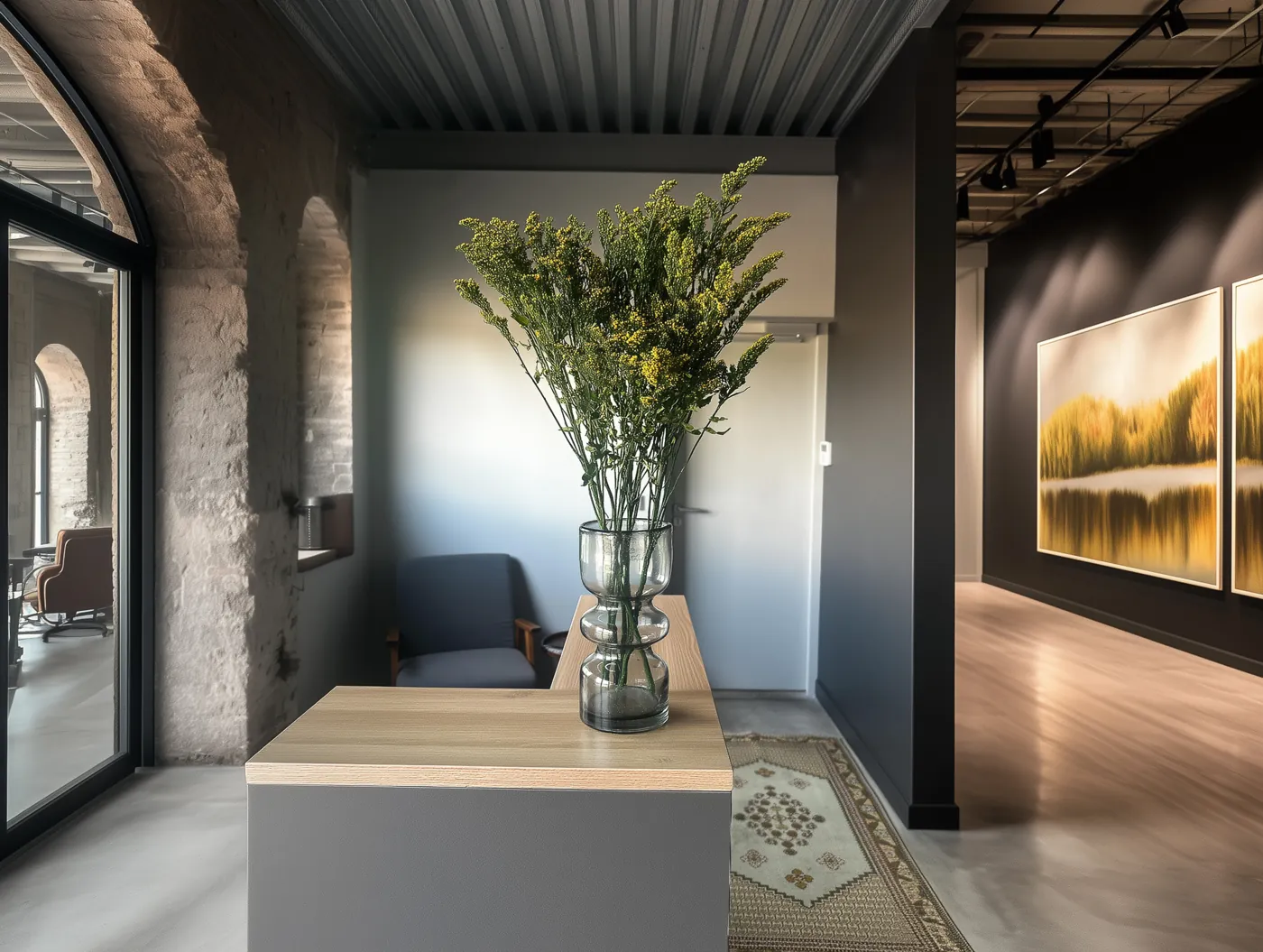
Level 3 · 20 minutes●●●
Make a statement
One tall vase for the entrance or the bar: long stems at the back, volume at the front. Turn it until it looks right from where guests walk in.
Tools: scissors, a tall vase
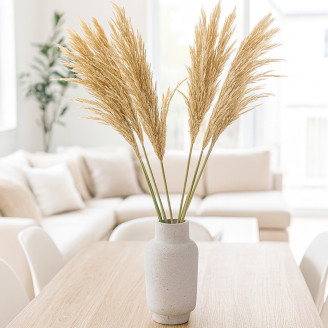 Preserved Pampas Grass Ivory
"The first thing we did was to replace all the centerpieces with preserved plants. It only took us a few hours, and now we're safe for several months: there's nothing left to do."
Guillaume, manager of the cocktail bar Le Parfum, interviewed in Preserved & Opportunities #01
What our clients learned
- Standardize. One centerpiece design, ordered in quantity, unlocks volume pricing (10% from 10 units, 20% from 20).
- Think stems. Most preserved flowers come without stems. Add long rose stems or flower holders to your first order.
- Keep it simple. A nice container and one plant are often enough. The room and the plates stay the stars.
- Keep a small stock. Stored in a box at room temperature, preserved stems keep for months: perfect for last-minute needs.
Bring it back every season
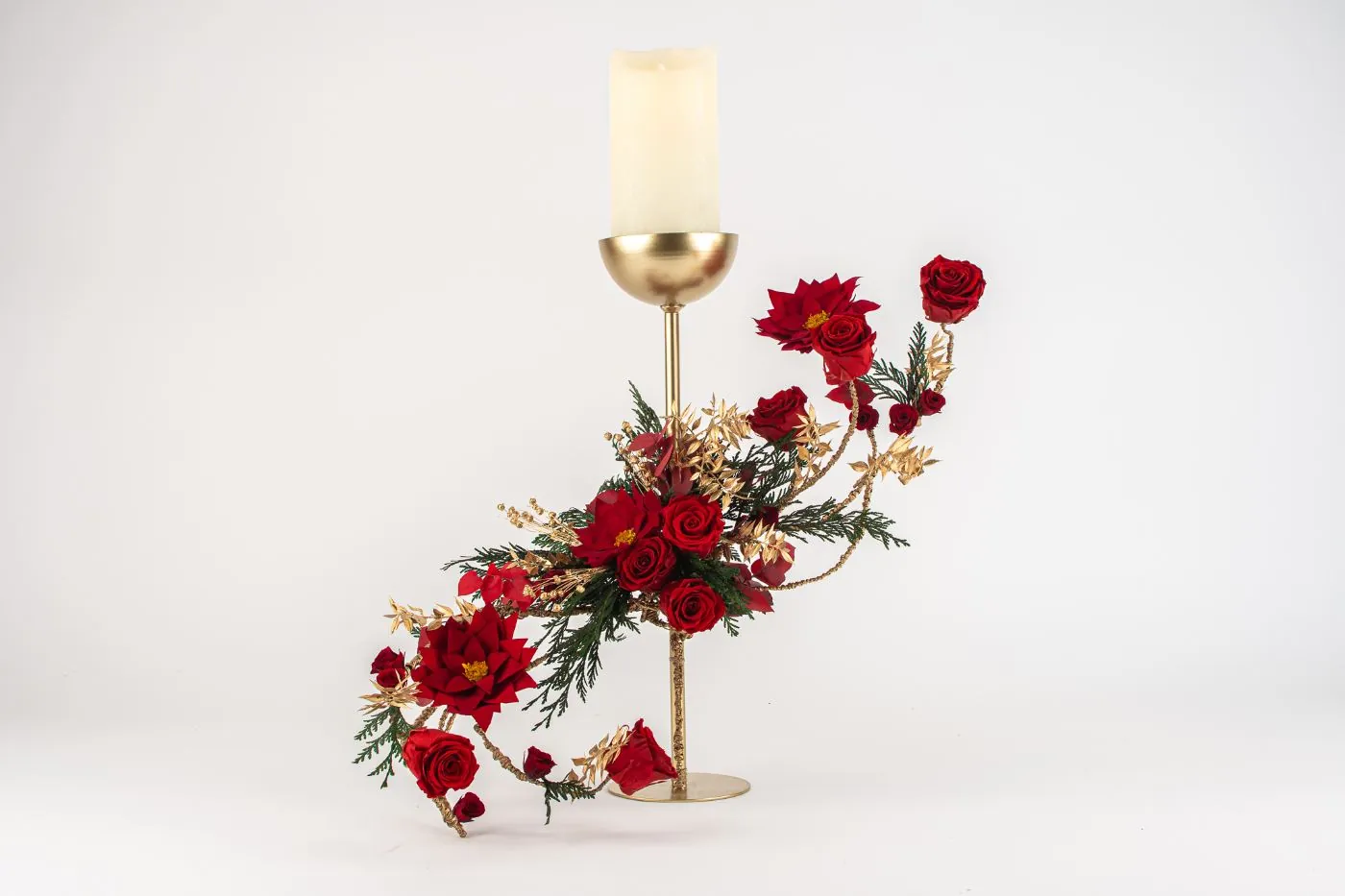
Your seasonal decor, paid for once
Christmas, Valentine's Day, Thanksgiving, Halloween, a private party: build the seasonal pieces once, put them away after the event and bring them out again next year. Every season you reuse them, their cost is divided again.
What a small centerpiece really costs. Mix three bunches, for example willow eucalyptus ($10.50), yellow barba grass ($7.30) and natural mini pampas ($8.90). About $27 of flowers makes 10 to 15 small centerpieces: roughly $2 each. Made by a florist and sold with a margin, a small centerpiece costs a venue about $5.
What that $5 centerpiece costs per season
- 1 season$5.00
- 2 seasons$2.50
- 3 seasons$1.67
- 4 seasons$1.25
- 5 seasons$1.00
Flower costs based on current SecondFlor pro prices, before volume discounts. The $5 is an example selling price.
The three bunches
 Preserved Eucalyptus Willow Green
 Dried Barba Yellow
- Store it. In a closed box, at room temperature, away from light. Nothing wilts, nothing rots, nothing to throw away.
- Refresh it. Change the ribbon, the container or one accent color and last year's piece looks new. One new bunch in this year's color refreshes 10 centerpieces.
- Remix it. Take pieces apart and combine them into new compositions for the next event.
Two business ideas
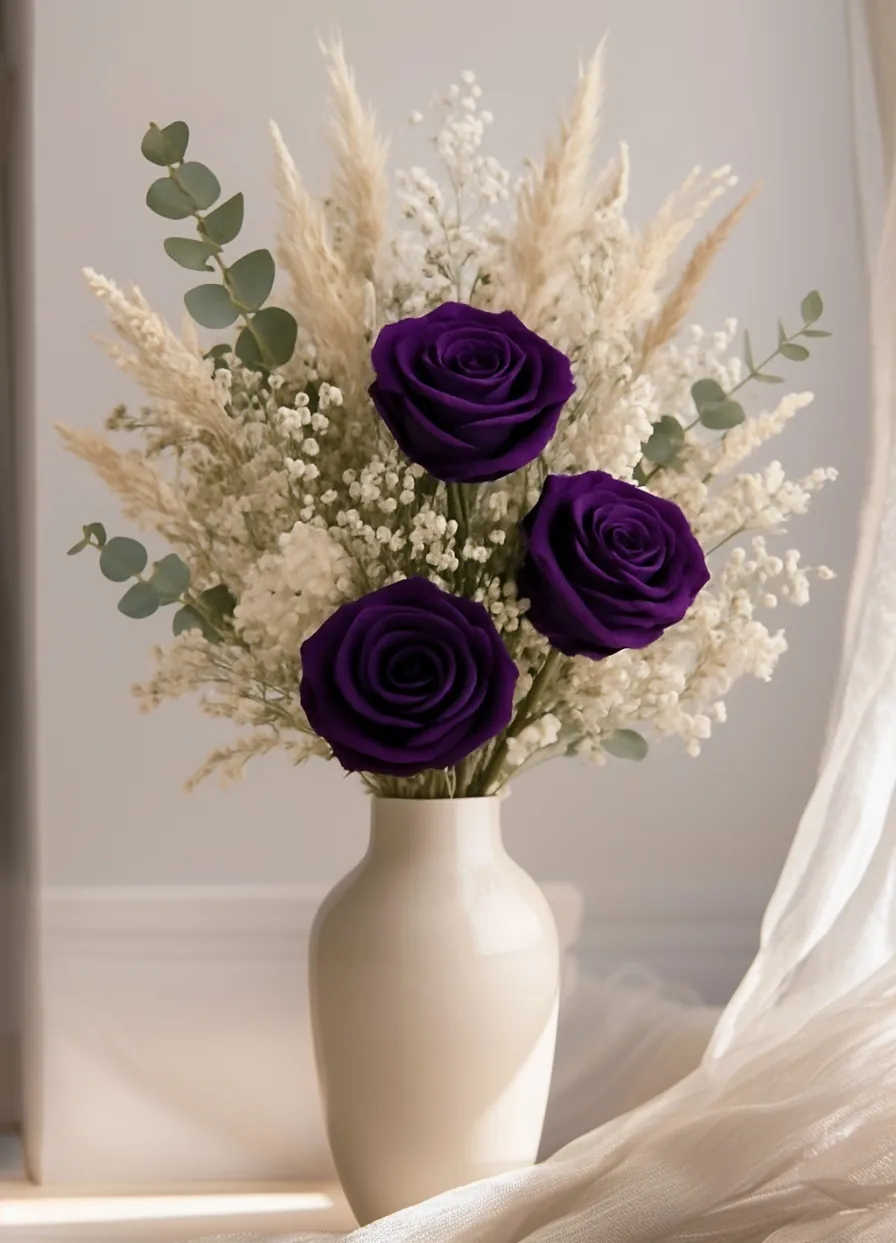
For florists and decorators
Sell a flower subscription
A fresh flower subscription means a new bouquet every week. Many restaurants and hotels stopped because of the bill. With preserved flowers, the same bouquet stays a month, or even a quarter, on the counter: you deliver less often and your client pays about four times less.
- Rotate. Move each arrangement from one client to the next on your monthly round, and keep one more arrangement than you have clients.
- Rent, don't sell. Each piece is rented again and again, so you can build bigger, more creative arrangements. Florists rent them from about $50 a month.
- Say "natural". Talk about natural preserved flowers, and remind your clients and their cleaning staff never to water them.
"Once a professional has understood the advantages of a preserved flower subscription, he rarely goes back: he wants preserved."
Birgit, manager of the florist À Fleur de Peau (France), interviewed in our Business File #03: Bouquet Subscription
For caterers and event planners
Put natural decor on your quote
Buy a set of centerpieces once and include them in every event. On your quote, write "Natural plant compositions": they are real plants, but there is no florist to book on the morning of the event, no water to carry and nothing to throw away afterwards. They pay for themselves at the very first event. From then on, every booking brings in cash.
Quote
Cocktail reception, 80 guests…
Service staff…
Natural plant compositions, 10 tables$150
Example: 10 small centerpieces = 3 bunches of preserved and dried flowers, about $27, bought once (about $50 if you buy them ready-made). Billed $15 per table, they pay for themselves at the first event. Example prices: you set your own.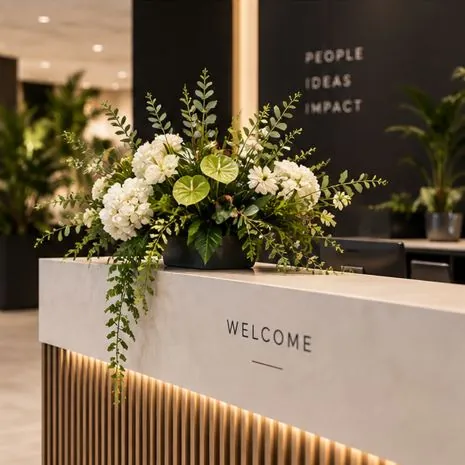
Good to know
Fire documentation: our preserved reindeer moss is classified Class I under ASTM E84, with the manufacturer's declaration on the product page. It is currently our only product with a US fire classification: use it for walls and panels in public areas.
Free guide
Preserved & Opportunities #01: Hotels & Restaurants
15 pages on costs, labor, allergens, seasonal changes and the limits of preserved plants, with interviews of a bar manager and of Benoît Saint-Amand, Meilleur Ouvrier de France in floral art.
Frequently asked questions
Do I need florist training to work with preserved flowers?
No. Most looks are a nice container and one or two kinds of stems. Preserved stems can be cut and bent freely, and there is no conditioning or watering to learn.
Can preserved flowers go in a restroom?
Yes. A restroom is fine. Avoid only rooms with steam, such as guest bathrooms with a shower, spas and kitchens: use faux greenery there.
Can preserved flowers go in a restaurant kitchen?
No. Steam and splashes make preserved plants release their solution and lose color. Dining rooms, bars and reception areas are ideal, as long as air humidity stays below about 70%.
How do we clean them?
Dust them gently a few times a year with a hair dryer on the cool, low setting, held about 12 inches away, or with a soft microfiber duster. Never use water or cleaning sprays.
How do we store seasonal decor?
In a closed box, at room temperature, away from light and humidity. Pieces come out next year as they went in; add a new accent or ribbon to refresh them.
Do they cause allergies or smell?
No. Preserved plants have no active pollen and no heady scent, so they never compete with your food or your room fragrance.
How fast can you deliver before an opening?
Everything on our site is in stock in Lawrenceville, Georgia, and ships in 24 to 96 hours across the contiguous US. For an opening, order a few days ahead.
Stop paying for flowers every week
Open your pro account to get wholesale prices from the first stem, or call us to plan your venue.