

BUSINESS
WHAT IS IT?
How to Ditch Floral Foam: Eco-Friendly Alternatives for Modern Florists
For decades, green synthetic foam was considered the industry standard for securing stems. Today, sustainable floral designers are actively moving away from it. From chicken wire and brass flower frogs (Kenzans) to natural sand and preserved moss, high-performing reusable alternatives make it easy to create stable, breathtaking arrangements without relying on single-use plastics.
Conventional floral foam presents serious environmental and health risks. It is non-biodegradable, crumbling into harmful microplastics and off-gassing toxic chemicals like formaldehyde.
Switching to foam-free floral mechanics allows you to elevate your brand’s eco-credentials, protect your health, and cut long-term supply costs. Here is your complete guide to going foam-free.
What Is Floral Foam Made Of, and Why Is It Bad for the Environment?
Traditional floral foam is a petroleum-based plastic matrix made primarily from phenol-formaldehyde and polyurethane resins. When soaked, cut, or handled, it sheds millions of microscopic plastic particles.
Key environmental and safety concerns include:
- Microplastic Pollution: Floral foam does not dissolve or compost. It breaks down into microplastics that wash down shop sinks, polluting waterways and aquatic ecosystems.
- Health Hazards: Inhaling foam dust exposes florists to volatile organic compounds (VOCs) and carcinogenic formaldehyde on a daily basis.
- Single-Use Waste: Unlike mechanics that can be sanitized and reused, foam bricks end up straight in landfills after a single event.
Fact Check: Is There Truly a Biodegradable Floral Foam?
FALSE. Currently, there is no 100% biodegradable synthetic floral foam on the market.
While certain manufacturers market "degradable" or "enhanced breakdown" foam bricks, these products typically undergo oxodegradation. The foam breaks apart faster into invisible microparticles, but the synthetic polymers and chemical additives remain in the soil.
True sustainability requires shifting away from disposable foam altogether in favor of reusable mechanics or organic bases.
What Can I Use Instead of Floral Foam? Top Foam-Free Mechanics
Whether you design with fresh blooms, dried stems, artificial flowers, or preserved greenery, these proven mechanics deliver structural integrity without the plastic waste.
1. Chicken Wire
Chicken wire is the staple mechanic of the No-Foam movement. Crushed into a loose 3D ball and placed inside vases, urns, or arches, it creates a flexible lattice that holds stems securely at any angle.
Why it works:
- Virtually indestructible, infinitely reusable, and lightweight.
- Ideal for large-scale installations, hanging clouds, and heavy woody stems.
- Easy to clean, sanitize, and store between events.
2. Kenzans (Brass Flower Frogs / Pin Holders)
Originating from the Japanese art of Ikebana, a Kenzan is a heavy lead or brass base set with sharp metal pins or a cell grid. Placed at the bottom of shallow bowls or vessels, stems are pierced directly onto the pins.
Why it works:
- Extremely durable and heavy enough to prevent top-heavy arrangements from tipping.
- Ideal for minimalist, Japandi, or fine-art floral styling.
- Artisanal, vintage aesthetic adds value to transparent or low-rimmed containers.
- Essential tool for authentic Ikebana-inspired designs.
3. Preserved Natural Moss
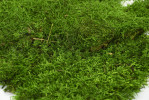
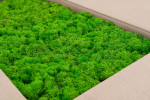
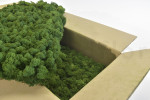
For long-lasting designs, permanent installations, or waterless arrangements, preserved moss (pole moss, sheet moss, or reindeer lichen) replaces synthetic bases seamlessly. Treated with plant-based glycerin, it stays soft and vibrant for years without requiring water or light.
Why it works:
- 100% natural, fully durable, and environmentally sound.
- Adds raw organic texture to dry or permanent installations.
- Serves as an eco-friendly selling point for corporate clients seeking sustainable decor (CSR alignment).
4. Compostable Bases (Paper, Straw & Natural Fiber Blocks)
Formed from recycled paper pulp, coconut coir, or compacted straw, these moldable bases provide excellent support for dried flowers, faux florals, or single-day event installations.
Why it works:
- Fully compostable at the end of life.
- Cost-effective and easy to cut or shape to fit custom containers.
5. Reusable Support Vessels & Natural Fillers
Repurposing clear glass, ceramics, or stoneware paired with natural weight bases—such as river rocks, glass marbles, or woven twigs—supports stem placement while highlighting the vessel itself.
Why it works:
- Zero-waste solution with unlimited reusability.
- Endless aesthetic flexibility across different design styles.
Sustainable Mechanic Comparison Table
| Mechanic / Material | Ideal Flower Types | Reusable? | Best Used For |
|---|---|---|---|
| Chicken Wire | Fresh, Dried, Faux, Preserved | Yes (Unlimited) | Vases, urns, floral arches, hanging clouds |
| Kenzan (Flower Frog) | Fresh, Dried, Preserved | Yes (Unlimited) | Shallow bowls, minimalist stems, Ikebana |
| Preserved Moss | Preserved, Dried, Faux | Yes (Multi-year) | Moss walls, permanent decor, waterless bases |
| Natural Straw & Fiber | Dried, Faux, One-day Fresh | Compostable | Wreaths, biodegradable event structures |
Preserved Botanicals: Eliminating Water Requirements Entirely
A major reason florists relied on floral foam was water retention for cut stems. By incorporating preserved flowers and foliage, you eliminate the need for water reservoirs completely.
When paired with reusable chicken wire or preserved moss bases, preserved florals allow event designers and decorators to build reusable, zero-waste installations that last for years without wilting or creating plastic trash.
The Bottom Line: Upgrading to Eco-Friendly Floral Design
Making the switch from synthetic floral foam requires a small adjustment in technique, but the ROI is clear: lower long-term supply costs, a safer working environment, and a strong competitive edge with eco-conscious clients looking for sustainable event design.